
Taurine in energy drinks: hype, facts and the honest truth
Taurine appears on almost every energy drink label, yet most people couldn’t tell you what it actually does. Is it a performance booster? A stimulant? Something your body needs? Here we cut through the marketing and explain what taurine really is, why it’s in your drink, and the honest reason RECOVERGY uses it.
What taurine actually is
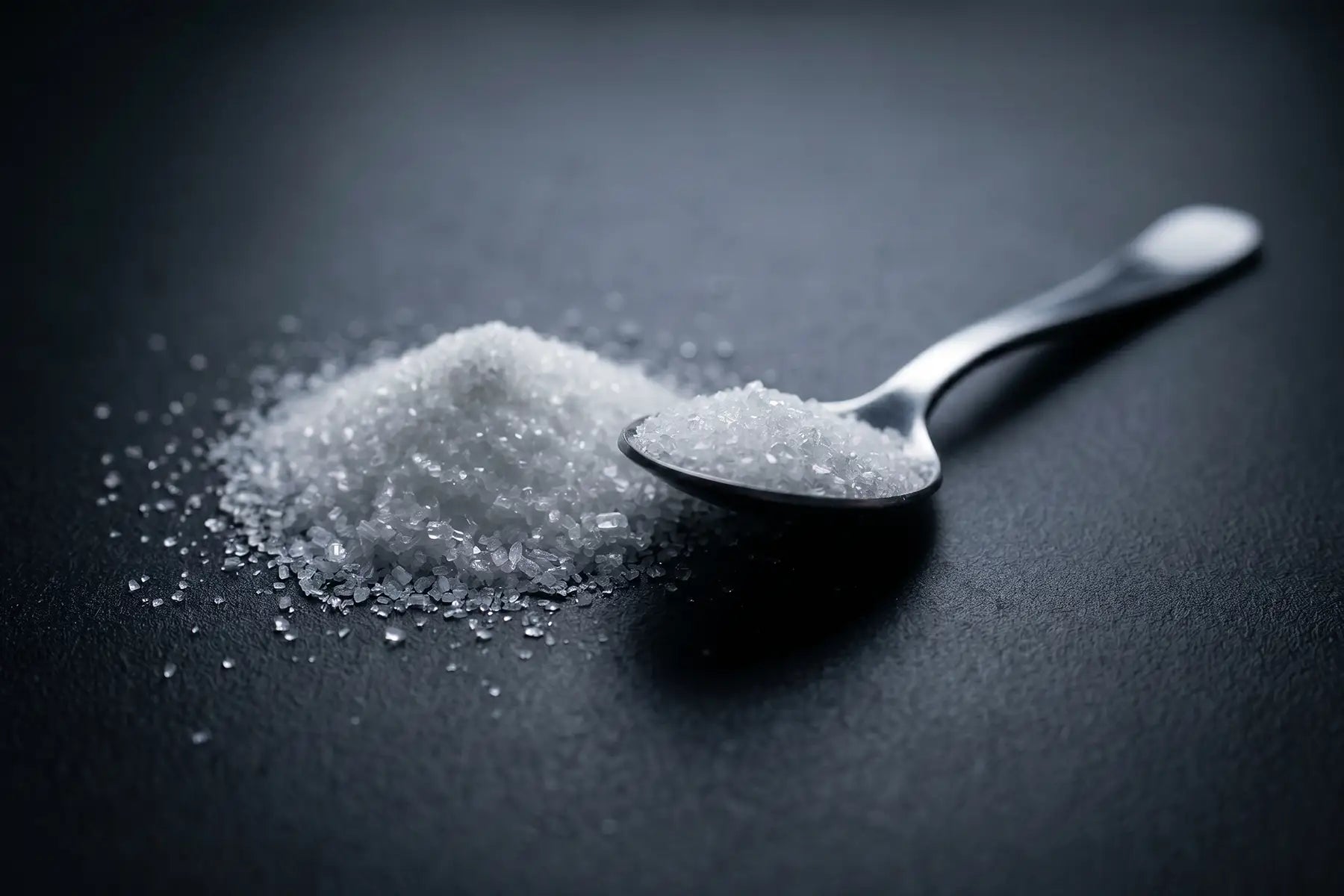
Taurine is an amino acid — more precisely an amino sulfonic acid — that your body produces on its own and that you also get from foods like meat and fish. It’s one of the most abundant amino acids in your muscles, brain and heart, where it plays a role in hydration, electrolyte balance and nerve function. In other words: it isn’t exotic, and it isn’t foreign to your body. You already make it every single day.
Where the name comes from
Here’s a small piece of trivia that doubles as myth-busting. Taurine was first isolated in 1827 by the German scientists Friedrich Tiedemann and Leopold Gmelin — from ox bile. That’s where the name comes from: the Latin taurus, meaning bull or ox. The name points only to where it was first discovered, not to any “bull” effect.
And that’s exactly where a stubborn myth begins: that taurine is extracted from bull testicles or urine. It isn’t. The taurine used in drinks today is produced synthetically, molecularly identical to the taurine your own body makes, with no animal origin at all.
Why taurine is in energy drinks at all
Here’s something most brands won’t tell you. In Germany it’s the law, not a choice. § 4 (2) of the Fruchtsaft- und Erfrischungsgetränkeverordnung (FrSaftErfrischGetrV) defines an energy drink as a caffeinated soft drink that additionally contains one or more of exactly three substances — taurine, inositol or glucuronolactone — listed in Anlage 8, Part B. Minerals and vitamins do not count toward that definition. So to label and sell a drink as an “energy drink” at all, German law requires at least one of those three to be in it.
And to bust a common myth while we’re here: sugar is not required. The qualifying list is just those three substances, none of which is sugar. A zero-sugar energy drink is fully compliant.
Does taurine actually boost performance?
This is where honesty matters. Taurine, inositol and glucuronolactone are often presented as performance enhancers. The evidence says otherwise. The European Food Safety Authority (EFSA) reviewed these substances and found them safe at the levels used in energy drinks — but found no proven performance benefit independent of caffeine. Your body already produces enough taurine and glucuronolactone on its own; an extra dose doesn’t unlock a hidden gear. The real “kick” in any energy drink comes from caffeine. Everything else is supporting cast.
Natural vs. synthetic taurine
The taurine used in drinks is usually produced synthetically. That can sound alarming, but it isn’t: the taurine molecule is identical whether it’s made in a lab or by your own body. “Natural” describes where an ingredient comes from, not how it behaves once it’s inside you. So the natural-versus-synthetic debate around taurine is mostly noise.
So why does RECOVERGY use taurine?
Here’s the honest part: we’d rather not add taurine at all. It carries no proven benefit beyond caffeine, and our formula doesn’t need it. But the law leaves no choice — under § 4 (2) FrSaftErfrischGetrV, to call this an energy drink at all, at least one of the three substances in Anlage 8 Part B is mandatory. Of taurine, inositol and glucuronolactone we chose taurine for one simple reason: it’s the name people recognise, so it needs the least explanation. The other two would only add confusion, not benefit, since none of the three changes performance on its own. In short: taurine is in the can because the legislator requires it, not because we wanted it there.
What we won’t do is pretend taurine is a secret weapon. It isn’t. RECOVERGY’s energy doesn’t come from a single magic ingredient — it comes from the formula as a whole: electrolytes, caffeine, essential vitamins, and zero sugar — each ingredient there for a clear reason.
The bottom line
Taurine is safe, it’s already part of your body, and it’s in your drink because the definition of an energy drink asks for it — not because it transforms your performance. We use the best-known of the eligible ingredients, and we’re honest about why. That transparency is the point. The performance comes from the whole formula, not the hype.
RECOVERGY — Beyond Energy.



Share:
The pros and cons of caffeine
BCAAs in sports: building blocks and why quality requires stability